Think in patterns, not special ingredients
Nutrition is often discussed through a search for the one food that changes everything. A more useful approach looks at the pattern of meals across days and weeks. Variety, adequate nourishment, and the balance between different food groups matter more than attaching a sexual-performance promise to an individual ingredient.
Sexual health has physical, emotional, and relational dimensions. Food is part of general health, not a direct control for desire or erectile function. This distinction allows a discussion of nutrition to remain useful without implying that intimate difficulties reflect a failure to eat correctly.
The cardiovascular connection
Dietary patterns are relevant to cardiovascular and metabolic health. Those systems also matter to erectile function, which depends partly on blood flow. This is a connection between areas of health, not proof that a particular meal will produce an immediate sexual response.
Public-health guidance emphasizes varied foods, including vegetables, fruit, pulses, and whole grains. It also distinguishes types of fat and encourages moderation in salt and free sugars. These principles describe a long-term eating pattern. They do not require an imported superfood or an expensive branded programme.
Build from familiar foods
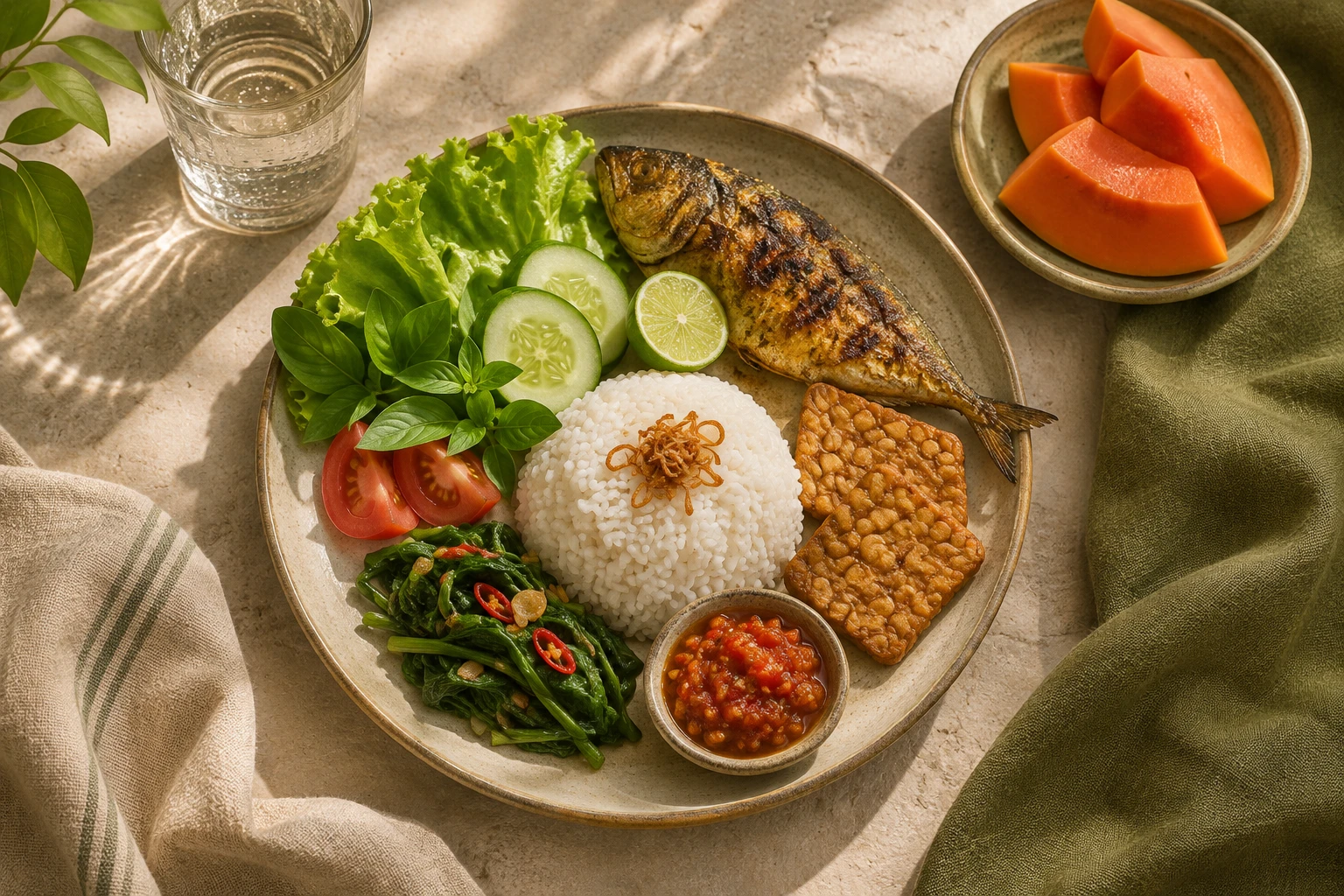
In an Indonesian household, familiar ingredients can provide many starting points. Tempeh or tofu can accompany vegetables and rice; beans can add variety to a meal; fruit can be an accessible snack. Fish, eggs, and other protein foods may fit according to preference, availability, and household practice.
Preparation and the overall plate matter too. A vegetable dish does not exist separately from its sauces, cooking method, and other foods in the meal. A realistic change might be adding another vegetable option or varying protein sources rather than replacing an entire cuisine with an unfamiliar menu.
Fiber, hydration, and the practical day
Whole grains, legumes, fruit, and vegetables are useful sources of dietary fiber. Water is an ordinary part of meeting fluid needs. Work outdoors, local heat, activity, and personal circumstances can affect how a day is organized around eating and drinking. There is no single beverage that substitutes for the broader pattern.
Practical barriers deserve attention. Long shifts may leave few food choices; shared meals may be shaped by family preferences; shopping budgets may fluctuate. Planning around those constraints is more sustainable than judging every meal against an idealized photograph. Frozen or conveniently prepared ingredients can sometimes make variety easier.
A realistic conclusion
Rather than asking whether a food boosts male potency, ask what role it plays in a balanced diet and whether the claim names a meaningful outcome. An advertising statement about energy may not concern sexual desire at all. A study about a nutrient deficiency may not apply to people with adequate intake.
Nutrition belongs alongside movement, sleep, social context, and the management of health conditions. It is valuable in its own right, even when changes in intimate well-being are uncertain or take a different course. The goal is a workable food pattern that fits everyday life, not a promise of restored performance.
Sources & further reading
These resources provide background for the topic; their inclusion does not imply institutional review of Manora Wellness.